How Much Does Supply Chain Management Software Cost in 2026?
Supply chain management software helps companies manage inventory, orders, warehouses, suppliers, forecasting, and product delivery. Development costs change with the features and the work involved in building them.

Integrations, data migration, user roles, security, team location, and hourly rates also influence the final price. A system for one warehouse takes fewer development hours than one managing multiple locations, sales channels, and suppliers. Real-time tracking, automated workflows, and ERP or accounting integrations increase the workload further.
This guide explains the costs involved in developing these systems. It compares development hours, key modules, regional rates, maintenance expenses, and existing solutions with custom development.
Supply Chain Management Software Cost Overview
The costs depend on the system size and the development hours. Starter systems usually handle core operations, while mid-market and enterprise platforms handle more workflows, integrations, users, and locations.
The table below calculates each range using our published development rate of $25 to $49 per hour.
| System | Development Hours | Cost at $25–$49/hr |
|---|---|---|
| Starter | 720–1,360 | $18,000–$66,640 |
| Mid-market | 1,840–3,120 | $46,000–$152,880 |
| Enterprise | 3,600–5,840 | $90,000–$286,160 |
The tier gives a general idea of project size, but it does not set the final price. Total development hours and the hourly rate usually give a more accurate cost estimate.
For example, a mid-market system in this estimate takes 1,840 to 3,120 hours. The final cost can vary depending on the rate charged for those hours.
The budget also continues after launch. Ongoing expenses usually include maintenance, hosting, infrastructure, updates, and support.
Supply Chain Management Software Cost Estimates
Published supply chain management software estimates vary significantly between companies. Some estimates cover basic inventory and order management, and a few may include warehouse operations, forecasting, supplier management, and third-party integrations. Besides the features and functionality, development rates and estimated hours also change the final figures.
The estimates below show the published ranges from six software development companies.
| Source | Starter / MVP | Mid-Complexity | Enterprise | Source Date |
|---|---|---|---|---|
| APPWRK | $9,000–$30,000 | $30,000–$90,000 | $90,000–$150,000+ | 2025 |
| DITS | $30,000–$70,000 | $80,000–$150,000 | $150,000–$300,000+ | Not dated |
| Admiral Studios | From $30,000 | $120,000–$150,000 | Up to $300,000+ | 2025 |
| DOSS | Not given | $120,000–$150,000 | Double mid-tier or more | 2025 |
| ScienceSoft | Not given | $200,000–$600,000 | $600,000–$1,500,000+ | Not dated |
| Coding Crafts | $18,000–$66,640 | $46,000–$152,880 | $90,000–$286,160 | September 2026 |
Mid-complexity estimates range from about $30,000 to $600,000. Features, project scope, estimated hours, and development rates can change the final cost.
What the Estimate Contains
Cost estimates do not always account for the same work. Some cover software development only, and others may account for data migration, customization, employee training, and implementation.
DOSS accounts for implementation work in its estimates. It also cites a median ERP implementation cost of $625,000 from Panorama Consulting.
Check whether the estimate accounts for migration, customization, training, and rollout. If the quote excludes these tasks, the company will have to budget for them separately before implementation.
What Mid-Complexity Means
Companies do not always classify mid-complexity systems in the same way. APPWRK lists a multi-supplier platform with WMS and ERP integrations as a mid-level system. ScienceSoft places IoT and advanced analytics within this category.
As a result, two systems under the same complexity level can have different features and prices. Check the modules, integrations, and functions listed in each estimate to see what the price accounts for.
The Development Rate
The hourly rate directly changes the project cost. APPWRK lists development rates of $25 to $50 per hour in South Asia and $80 to $150 in North America.
A 2,000-hour project would cost around $70,000 at a $35 hourly rate. At $120 per hour, the estimated development cost would be around $240,000. Compare quotes using both the estimated hours and hourly rate. These figures show how the company calculates its price.
What Goes Into the Development Cost?
Supply chain software uses different modules for inventory, orders, warehouses, suppliers, forecasting, and other operations. Each module takes separate development time.
The calculation below converts APPWRK’s published 2025 module timelines into estimated development hours. It assumes two engineers working 40 hours each per week.
| Module | Published Timeline | Hours | At $25/hr | At $49/hr |
|---|---|---|---|---|
| Inventory management | 4–8 weeks | 320–640 | $8,000–$16,000 | $15,680–$31,360 |
| Order management | 5–9 weeks | 400–720 | $10,000–$18,000 | $19,600–$35,280 |
| Warehouse management | 6–10 weeks | 480–800 | $12,000–$20,000 | $23,520–$39,200 |
| Planning and forecasting | 8–12 weeks | 640–960 | $16,000–$24,000 | $31,360–$47,040 |
| Four-module total | 23–39 weeks | 1,840–3,120 | $46,000–$78,000 | $90,160–$152,880 |
The timelines come from APPWRK’s 2025 figures. We converted them into hours for a two-engineer team. The totals follow our published Clutch rate of $25 to $49 per hour.
Under these assumptions, a four-module mid-market system costs $46,000 to $152,880. The lower figure comes from the minimum hours at $25 per hour. The upper figure reflects the maximum hours at $49 per hour. This gives an estimated range. The final amount depends on the development hours and rate applied to the project.
APPWRK also prices individual modules separately. It estimates inventory management at $5,000 to $25,000. Order management ranges from $6,000 to $20,000. Its four listed modules total $31,000 to $115,000.
Comparing the module prices with the published timelines gives an effective rate of about $17 to $37 per hour. This falls below APPWRK’s published South Asian rate of $25 to $50 per hour. Differences in project work or team structure could explain the gap.
The comparison shows how two estimates can reach different totals. Check the listed work and development hours. Also look at the hourly rate behind the calculation. For more detail on calculating software budgets, see our cost estimation approaches.
Supply Chain Software Cost by Project Size
The number of modules increases as the system grows. Starter systems usually handle core inventory and order workflows. Mid-market and enterprise platforms involve more warehouses, suppliers, integrations, automation, and user roles.
Each additional module increases development hours and the total project cost.
| Tier | Scope | Hours | Cost at $25–$49/hr | Sequential Timeline |
|---|---|---|---|---|
| Starter | Inventory and order management | 720–1,360 | $18,000–$66,640 | 9–17 weeks |
| Mid-market | Adds warehouse management and forecasting | 1,840–3,120 | $46,000–$152,880 | 23–39 weeks |
| Enterprise | Adds a control tower and advanced traceability | 3,600–5,840 | $90,000–$286,160 | 45–73 weeks |
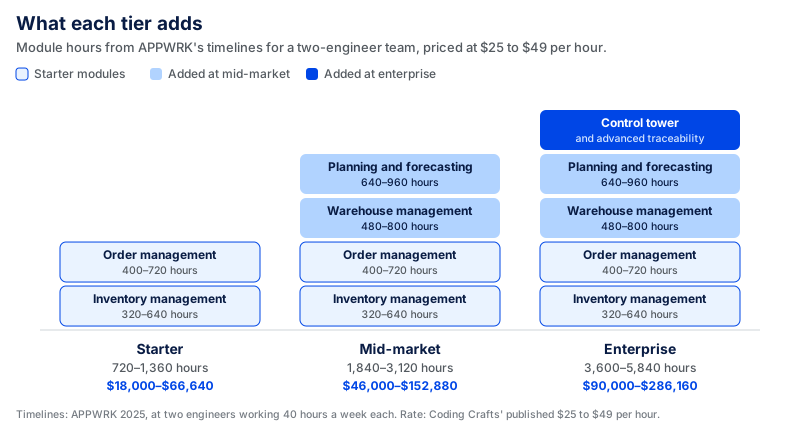
The hours come from APPWRK’s published module timelines. We calculate the prices using our published rate of $25 to $49 per hour.
The timeline assumes the team builds each module one after another. A larger team can work on several modules at the same time to shorten the schedule.
Our mid-market estimate equals about five to nine months using sequential development. DOSS estimates three to six months for mid-sized deployments and six to ten months for custom planning systems.
Coding Crafts lists a $10,000 minimum project size on Clutch. For smaller budgets, an existing product can be a more practical option than custom development.
Supply Chain Software Development Rates by Region
Development rates vary between regions. A project can have a different total depending on where the development team works.
The table below applies APPWRK’s published regional rates to a 2,480-hour project. This figure represents the midpoint of the mid-market estimate above.
| Team Location | Published Hourly Rate | Cost for 2,480 Hours |
|---|---|---|
| North America | $80–$150 | $198,400–$372,000 |
| Western Europe | $70–$120 | $173,600–$297,600 |
| Eastern Europe | $40–$70 | $99,200–$173,600 |
| Latin America | $35–$60 | $86,800–$148,800 |
| South Asia | $25–$50 | $62,000–$124,000 |
| Coding Crafts | $25–$49 | $62,000–$121,520 |
Regional rates are from APPWRK’s 2025 figures. The Coding Crafts rate appears on our Clutch profile. Each calculation is for 2,480 development hours.
North America starts at $198,400. South Asia starts at $62,000. The North American estimate is about 3.2 times higher at these rates.
The highest North American rate is six times the lowest South Asian rate. However, this comparison takes opposite ends of the two ranges. Comparing the lower rates or upper rates from both regions gives a more consistent view of the cost difference.
Should You Buy or Build Supply Chain Management Software?
Companies do not always have to build custom supply chain software. Existing products can cost less for smaller teams with standard workflows.
DITS estimates mid-tier software at $50 to $500 per user each month and enterprise licenses at $20,000 to $100,000 per year. Admiral Studios estimates $100 to $500 per month for 1 to 10 users, $1,000 to $5,000 for 10 to 50 users, and $10,000 to $50,000 or more for enterprise use.
Custom development has a higher initial cost but gives companies full control over the features and integrations. The table compares three years of software licensing with custom development plus two years of maintenance at 20%.
| Users | Three Years of Licenses | Three Years of Custom Software |
|---|---|---|
| 1–10 | $3,600–$18,000 | $86,800–$170,128 |
| 10–50 | $36,000–$180,000 | $86,800–$170,128 |
| 50+ / enterprise | $360,000–$1,800,000 | $86,800–$170,128 |
The license figures are from Admiral Studios’ published ranges. The custom estimate takes the 2,480-hour mid-market example and adds two years of maintenance at 20%.
Existing software costs less for teams with 1 to 10 users under these estimates. The ranges begin to overlap for teams with 10 to 50 users.
Cost is not the only consideration. Custom development supports workflows or integrations that standard products do not offer. Existing software fits companies that prefer a ready-made system with ongoing updates and maintenance.
Customization increases the overall expense. Published estimates price this work at $125 to $275 per hour on top of license fees.
Look at costs over several years for a more complete comparison. For a separate team cost comparison, see our in-house versus outsourcing costs guide.
What Increases Supply Chain Management Software Cost?
The cost increases as the system handles more workflows, users, locations, and integrations. Each additional function takes more development and QA time. Here are a few key factors that increase the overall cost.
Legacy ERP Integrations
Connecting supply chain software to an existing ERP increases development work. APPWRK estimates ERP integration at $10,000 to $50,000 or more. DOSS prices individual integrations at $1,000 to $25,000. Systems with documented APIs take less work to integrate than older platforms with limited documentation or custom interfaces.
Data Migration
Companies usually store years of inventory, supplier, customer, order, and warehouse data in different systems. Moving this information to a new platform is a time-consuming task.
DOSS lists data migration as a separate implementation expense. The quote should state the migration cost and specify which records will move to the new system.
Number of User Types
Supply chain platforms can serve warehouse staff, dispatchers, procurement teams, managers, suppliers, and executives. Each role can have different screens, permissions, workflows, and reports. More user roles increase the design, development, and QA work.
Development Team Location
Hourly rates vary by region. In the comparison above, the same 2,480-hour project costs $62,000 at the lower South Asian rate and $198,400 at the lower North American rate. Compare quotes using both the hourly rate and estimated hours.
Uptime and Reliability
Warehouse and delivery systems often run continuously. Therefore, downtime can interrupt daily operations. Higher uptime targets involve redundant infrastructure, failover systems, monitoring, backups, and performance work. These measures increase infrastructure and development costs.
Compliance and Traceability
Companies handling regulated goods often have additional security, reporting, audit, and traceability work. APPWRK estimates a compliance and security layer at $5,000 to $20,000. Food, pharmaceutical, and other regulated supply chains can involve additional compliance work depending on the product, system, and market.
What Does Supply Chain Software Cost After Launch?
The initial development cost is only part of the total software budget. Companies also pay for maintenance, updates, infrastructure, and support after launch.
APPWRK estimates annual maintenance at 15% to 25% of the original development cost. DOSS gives a range of 15% to 20%, and Admiral Studios charges $6,000 to $60,000 for annual maintenance.
The table below applies a 20% annual maintenance rate to the 2,480-hour mid-market example over three years.
| Expense | Low | High |
|---|---|---|
| Year 1: Development | $62,000 | $121,520 |
| Year 2: Maintenance | $12,400 | $24,304 |
| Year 3: Maintenance | $12,400 | $24,304 |
| Three-year total | $86,800 | $170,128 |
The development calculation uses 2,480 hours at our published rate of $25 to $49 per hour. Annual maintenance equals 20% of the initial development amount.
Hosting creates a separate expense. DITS estimates cloud hosting at $500 to $5,000 per month. The actual amount depends on traffic, data storage, transaction volume, uptime targets, and integrations.
Calculate development, maintenance, infrastructure, and other recurring services separately. This shows the total software cost over several years. For more detail, see our development versus maintenance cost guide.
When Should You Buy Instead of Build?
Custom supply chain software is not necessary for every company. Existing software can be a better option when standard features already support most business operations.
Small Team
Admiral Studios lists three years of licenses for 1 to 10 users at about $3,600 to $18,000. This range is lower than the custom development example above. Small teams should also consider development, maintenance, hosting, and support when comparing the two options.
Standard Processes
Existing products already support common inventory, warehouse, order, supplier, and reporting tasks. Developing these functions from scratch takes additional time and offers little value when standard software already meets the business requirements.
Faster Launch
Buying existing software removes the cost of developing every module from scratch. The company still pays for configuration, data migration, integrations, and employee training. This approach can shorten the implementation process compared with full custom development.
Limited Customization
An existing product can work well when the company only wants minor configuration changes. Extensive customization increases implementation costs and can create more work during future upgrades.
No Software Owner
Custom software requires continuous maintenance, security updates, infrastructure management, bug fixes, and technical support. The company also has to assign someone to set priorities and approve future changes.
Process Problems
New software cannot correct inaccurate data or inefficient warehouse processes on its own. Unclear responsibilities also require changes within the company. Identify these operational problems before investing in a new system.
Standard Integrations
Existing software is a practical option when it already integrates with your ERP or accounting platform. The same applies to e-commerce systems and shipping tools. Custom integrations increase development time and ongoing maintenance.
Custom development becomes more relevant when standard products do not support important workflows. It also fits projects where several systems must exchange data in a specific way or extensive customization makes packaged software expensive to maintain.
Build Supply Chain Management Software With Coding Crafts
Coding Crafts develops custom software at a published rate of $25 to $49 per hour. Our Clutch profile lists a minimum project size of $10,000.
We calculate estimates from the project scope and expected development hours. Clients can see the modules and estimated hours. They can also see the hourly rate and assumptions behind the budget.
We have not delivered a complete supply chain management platform. Our closest related project is LuxPark. The logistics application connects property owners with trucking companies. The published case study does not report performance figures.
Companies looking for previous supply chain platform experience should consider this when comparing development teams.
For a new project, we can break each module into development tasks. We then estimate the hours involved. See our SaaS development approach for more detail.
Frequently Asked Questions
Why Do Supply Chain Management Software Cost Estimates Vary So Much?
Companies calculate estimates using different features and service scopes. Check the work behind each estimate before comparing the final price.
Can I Build One Supply Chain Module First?
Yes. A company can develop inventory or order management first and add other modules later. The initial architecture should support future expansion.
Does Cloud Hosting Cost Less Than On-Premise Infrastructure?
Cloud hosting replaces hardware investment with recurring service charges. Compare long-term cloud expenses with server ownership and internal IT costs.
How Long Does Supply Chain Software Take to Pay for Itself?
Calculate the annual financial savings the system generates. Compare that amount with the total investment to estimate the payback period.
Should I Hire an In-House Team to Build Supply Chain Software?
An in-house team works well for continuous long-term development. An external team can handle a defined project without permanent technical hiring.
Scope your supply chain build module by module
Coding Crafts breaks supply chain software into modules, estimates the hours for each at $25 to $49 per hour, and shows the assumptions behind the budget before any code is written.
More from the blog.
View all postsRelated reading from the Coding Crafts team.