MVP Development Cost: What Startups Should Budget in 2026

One of the first questions founders ask when planning an MVP is how much it will cost. The answer is that there is no single figure, since a simple product with one core feature differs greatly from an MVP with multiple user roles, payment processing, third-party integrations, AI features, or compliance requirements.

The scope of the first release has the biggest influence on the budget. The platforms you use, the requirements, back-end complexity, integrations, security, and the team on contract can all drive the final price up or down. A clear scope makes it easier to estimate the budget without paying for features you can defer for later.
At Coding Crafts, we work with startups to turn product ideas into a defined MVP scope before development begins. This includes identifying required tests, deciding what to include in the initial version, and mapping the technical tasks to those priorities.
This guide explains MVP development costs in 2026 by complexity, product type, development phase, team model, and developer location. It also includes all the costs that are easy to overlook and explains how to make an informed budget estimate before you ask for a development quote.
Why Build an MVP Before Investing in a Full Product?
You do not need to build the full product to see if your idea will work. An MVP gives users the main part of the product first, so you can see how they use it and what they think about it.
Their feedback can show what works, what needs to change, and whether it makes sense to invest more in the product.
Validate Your Product Idea With Real Users
An MVP lets real users try your product. You can see if they actually have the problem you want to solve and whether your product helps them solve it.
You may also learn things you did not expect. Users may get stuck at a certain step, use a feature differently, or ignore something you thought was important. You can use this feedback to improve the idea before spending more time and money on development.
Reduce Development Costs and Product Risk
The cost of an MVP grows as you add more features. If you build too many features before knowing what users actually need, you may spend a large part of your budget on things that bring little value to the first release.
Start with the features you need to test the main product idea with real users. Features that are not important for this test can be saved for a later version. This keeps the first release focused and gives you time to learn what users actually want.
If users respond well to the MVP, you can continue investing in the product with more confidence. Their feedback will give you a clearer idea of what needs improvement, which features are worth adding, and where to spend your development budget next.
Reach the Market Faster
An MVP has fewer features, so it takes less time to design, develop, and test than a complete product. You can launch the first version earlier instead of waiting until every feature on the product roadmap is ready.
Once real users start using the MVP, you can see how the product performs outside the development environment. The team can find problems earlier, make changes based on actual use, and make future decisions based on what users do instead of what was expected before launch.
Use Early Feedback to Prioritize Future Features
The features you plan before launch may not be what users actually need. Once people start using the product, they may ask for features you had not considered. They may also show little interest in features you thought were important.
Use this feedback to decide what to build next. Focus on features that users need most or ask for often. Other ideas can stay on the roadmap until users actually need them.
How Much Does It Cost to Build an MVP in 2026?
The cost of an MVP depends on the scope, features, technical requirements, and the team needed to build it. According to Coding Crafts' MVP development services, most MVPs cost between $10,000 and $100,000, depending on the complexity, industry, development team, and features required.
The amount of work can change quickly as the product becomes more complex. A simple MVP may focus on one main function, while other products may need payments, multiple user roles, integrations, AI features, or compliance from the first release. Looking at MVPs by complexity gives a clearer idea of how these requirements can affect the budget and timeline.
MVP Cost by Complexity
The table below gives a practical view of how the budget can change as more functionality is added.
| MVP type | Typical scope | Suggested cost range | Typical timeline |
|---|---|---|---|
| Lean validation MVP | One main user journey, basic UI, simple data storage, and few or no external integrations | $5,000–$15,000 | 2–4 weeks |
| Standard startup MVP | User accounts, dashboard, core backend, payments, notifications, and a few API integrations | $15,000–$50,000 | 3–6 weeks |
| Advanced MVP | Multiple user roles, custom backend logic, AI or data features, third-party services, and more detailed UX | $50,000–$150,000 | 6–12 weeks |
| Regulated/enterprise MVP | Sensitive data, advanced access controls, audit trails, compliance requirements, security testing, and complex architecture | $80,000–$250,000+ | 12–20+ weeks |
These ranges can help you plan an early budget, but the number of features is not the only thing that affects the final cost. A product with ten screens may cost more than one with twenty if it needs complex APIs, payments, AI features, large amounts of data, or stronger security.
You can also read our MVP development guide for more information about MVP costs, timelines, and the factors that can affect your budget.
A more accurate estimate can be made once the scope is clear. The development team needs to understand the main user journey, features, integrations, platform, and technical requirements before giving you a realistic quote.
What Determines MVP Development Cost?
Two MVPs may look similar but still have very different development costs. The final cost depends on how much work is needed to design, build, test, and launch the product. Some features may look simple to users but require more work behind the scenes.
The following factors usually have the biggest impact on MVP development cost.
Feature Scope and Product Complexity
Every feature takes time to design, build, and test. Simple features like login or a user profile usually take less work. Features such as payments, different user roles, reports, or approval steps can take more time.
The cost also increases when many features need to work together. For example, a marketplace may need separate accounts for buyers and sellers, along with search, payments, messaging, and order management. All these parts need to connect and work properly.
To control the cost, keep the first version focused on the most important features. Other features can be added later as the product grows.
Web, Mobile, or Cross-Platform Development
The platform you choose can affect the cost of your MVP. A web product needs to work across common browsers and screen sizes. A mobile app also needs device testing and preparation for the app stores.
Building separate apps for iOS and Android usually takes more work. Cross-platform development can reduce some of this work by using the same code for both platforms, but each app still needs testing.
For an MVP, you may not need web and mobile versions at the same time. Start with the platform your target users are most likely to use. You can add other platforms later.
UI/UX Design Requirements
Design costs depend on how simple or complex your product is. An MVP with a few basic screens will usually take less design work than one with dashboards, charts, complex interactions, or several user journeys.
Good UX also includes the full user flow, onboarding, error messages, empty screens, and accessibility. These details help users understand how to use the product.
Your MVP does not need a complex design. Keep it simple and make sure users can easily complete the main task.
Backend and Infrastructure Complexity
A lot of development work happens behind the scenes. The backend stores data, manages users, handles business rules, processes requests, and connects the product with other services.
The cost can increase if the MVP has large amounts of data, different user roles, complex permissions, real-time updates, or other technical requirements.
You do not need to build the MVP for millions of users from the start. The first setup should handle your early users and leave room for the product to grow later.
Third-Party Integrations
Third-party services can save time because you do not have to build everything yourself. You can use existing services for payments, maps, email, SMS, authentication, analytics, CRM, and other needs.
These services still need to be connected and tested with your product. The team also needs to handle errors and make sure data moves correctly between the systems.
Some integrations are easier than others. A simple, well-documented API may take less time to connect, while an older or more complex system may require more development work.
Security and Regulatory Compliance
If your MVP handles sensitive customer, financial, healthcare, or business data, it may need extra security. This can include secure login, user permissions, encryption, backups, audit logs, and security testing.
Some products also need to follow specific regulations. For example, a healthcare product in the U.S. may need to meet HIPAA requirements. Products that collect personal data may also need to follow privacy laws such as GDPR.
These requirements can add more work to development, testing, and infrastructure. If your MVP needs to meet certain rules before customers can use it, plan for them from the beginning instead of adding them later.
Understanding MVP Costs by Product Type
The type of product you are building can affect the cost of your MVP. A SaaS product, marketplace, mobile app, or AI product may look similar in size, but each one needs different features and technical work.
The cost depends on what needs to be built, connected, secured, and tested for the first release.
SaaS MVP Development Cost
A SaaS MVP usually needs more than the main product feature. It may also need user accounts, dashboards, subscriptions, billing, and account settings.
B2B SaaS products may need different user roles, admin access, and separate data for each customer. Reporting, automation, integrations, and complex data can add more development and testing work. To keep the cost manageable, focus the first release on the main user journey and the features needed to complete it.
Marketplace MVP Development Cost
A marketplace usually has two types of users, such as buyers and sellers or customers and service providers. Each group may need its own account, screens, and actions.
The MVP may also need listings, search, profiles, payments, messaging, notifications, and order or booking management. Payments can require more work if the platform needs to collect money from one user and send it to another.
Features such as reviews, refunds, disputes, identity checks, and moderation can add more cost. You do not need all of them in the first version. Start with what both sides need to complete the main transaction.
Mobile App MVP Development Cost
The cost of a mobile MVP depends on whether you need an iOS app, an Android app, or both. Building for both platforms can take more time because the app needs to work properly on different devices.
Features like GPS, notifications, camera access, biometric login, offline use, and in-app payments can also increase the cost. The app may also need a backend, database, user login, and admin panel. For the first version, you can start with the platform your users are most likely to use. The other platform can be added later.
AI MVP Development Cost
The cost of an AI MVP depends on what you want the AI to do. A simple product that connects to an existing AI model may cost less than one that needs to work with private data, documents, or other business tools.
More complex AI features need more development and testing. For example, the product may need to search company data, read documents, remember conversations, or connect with other software.
AI products can also have costs after launch. You may need to pay for AI model usage, data storage, processing, and monitoring. These costs can grow as more people use the product.
Fintech and Healthcare MVP Development Cost
Fintech and healthcare MVPs can cost more because they often handle sensitive information and need stronger security. A fintech MVP may need secure login, payment or banking connections, user permissions, transaction records, and other security features. What you need depends on the type of product and where it will be used.
A healthcare MVP may need to protect patient data, control what patients and staff can access, and connect with other healthcare systems. In the U.S., products that handle protected health information may also need to follow HIPAA requirements.
Plan for security and compliance from the start. These requirements can affect how the MVP is built and tested. Adding them later may mean changing parts of the product that are already complete.
How Much Does Each Stage of MVP Development Cost?
Your MVP budget covers more than just development. You also need to plan for product planning, design, testing, launch, and support after the MVP goes live.
Our software development cost breakdown explains how a software budget is usually divided across these stages. The exact cost will depend on your product, but this can help you understand where your MVP budget may go.
| Stage | What happens | Typical share of budget |
|---|---|---|
| Discovery/scoping | User problem, requirements, scope, technical risks, planning | Around 10% |
| UX/UI | User flows, wireframes, screens, interface decisions | 5–10% |
| Development | Frontend, backend, APIs, database, integrations | Around 65% |
| QA | Functional, integration, device, and regression testing | 15–20% |
| Deployment | Production setup, release, infrastructure, migration where needed | Varies by project |
| Post-launch | Fixes, security updates, support, and product changes | Around 15–25% of the original build cost per year |
These percentages are only a general guide. The actual cost depends on your MVP. A complex backend may increase development costs, while a mobile app may need more testing. Compliance, data migration, and launch needs can also affect the budget.
Discovery and MVP Scoping
Discovery helps the team decide what the first version of the product needs to include. Start with the problem you want to solve, who the product is for, and what users should be able to achieve. Then decide which features are needed for the first release and which ones can wait.
You should also decide how you will measure the MVP after launch. This could include how many users complete onboarding, use the main feature, return to the product, or become paying customers.
The Coding Crafts six-step MVP development process starts with research and defining the core features before moving to planning, design, development, and launch. A clear scope can also help control the budget. If a feature is not needed to test the main idea, it can be saved for a later release.
Freelancer vs Agency vs In-House Team: Which Costs More?
The development team can vary, which can affect development costs and how much work the startup needs to handle itself. A freelancer can have a lower upfront cost, whereas an agency or committed staff can add many more roles to the project. In-house has a different cost model because salaries, hiring, tools, and employee costs continue after the initial release.
| Model | Upfront cost | Management Burden | Speed | Best Suited For |
|---|---|---|---|---|
| Freelancer | Lower | High when several specialists are needed | Depends on availability and scope | Small MVPs with a clear and limited scope |
| Development agency | Higher | Lower | Team can work on design, development, and QA in parallel | Startups that need several technical skills without hiring internally |
| In-house team | High setup and ongoing cost | High | Slower to start if hiring is required | Products that need continuous development and long-term internal ownership |
| Dedicated development team | Medium to high | Medium | Faster once the team is set up | Startups that need an external team working closely with them for a longer period |
Low initial cost doesn't necessarily mean low total cost. The comparison should also encompass the existing skills in the team, the level of management the founders can provide, and the possibility of future development after the MVP's launch.
Freelancer MVP Development Cost
A freelancer can be a good choice for a small MVP with clear requirements. If you only need a landing page, simple web app, prototype, or one main feature, a freelancer may cost less.
It can become more difficult when the MVP gets bigger. One developer may not be able to handle design, development, testing, security, DevOps, and project management. You may need to hire more freelancers for these areas.
Managing several freelancers also takes time. Someone needs to manage the tasks, track progress, and make sure all parts of the product work together. These costs may not be included in the first quote, but they can still add to the total MVP cost.
MVP Development Agency Cost
An agency usually costs more than a freelancer because several people may work on the MVP. The team can include designers, developers, QA engineers, DevOps engineers, and project managers.
This means the startup does not have to hire and manage each person separately. Design, development, testing, and technical work can also happen together.
The final cost depends on the agency and your MVP requirements. Before choosing an agency, check what is included in the price. Some agencies include planning, design, testing, deployment, and support, while others may charge separately for these services.
In-House MVP Development Cost
Building an in-house team costs more than just developing the MVP. You need to pay salaries, benefits, software, equipment, cloud services, and other team expenses.
Hiring the right people can also take time. An MVP team may need developers, designers, QA engineers, and technical experts. In a small startup, one person may handle more than one role.
The main benefit is that the team stays with the company. After launch, they can continue improving the product, fix problems, and work on new features. An in-house team can make sense when the product needs ongoing development and there is enough work for a permanent team.
How Developer Location Affects MVP Cost
The cost of an MVP can change depending on where your development team is located. Developer rates are different across regions because of local salaries, demand, and living costs.
Here is a general view of software development rates by region in 2026:
| Region | Indicative Hourly Range | Main consideration |
|---|---|---|
| United States/Canada | $100–$200+ | Higher rates with easier time-zone overlap for North American startups |
| Western Europe | $70–$150 | Higher development rates, with convenient collaboration for European companies |
| Eastern Europe | $40–$85 | Lower rates than Western Europe with an established outsourcing market |
| LATAM | $35–$80 | Competitive rates and useful time-zone overlap with North America |
| South Asia | $20–$60 | Lower hourly rates and a large developer talent pool |
These ranges can help you plan your budget, but the final cost depends on more than location. Experienced developers usually charge more than junior developers.
A lower hourly rate does not always mean a cheaper MVP. If the work takes longer or needs many changes, the total cost can increase. An experienced team may charge more per hour but finish the work faster.
Time zones also matter when working with teams in other countries. Some locations may have more working hours in common with your team, while others may need more planning for meetings. When comparing teams, look at the total project cost, experience, estimated time, services included, and communication.
Does AI Make MVP Development Cheaper in 2026?
AI tools can make some development tasks faster. Developers can use them to write code, create tests, find bugs, and handle repetitive work. But the amount of time saved depends on the project.
Research also shows different results. A GitHub study found that developers using Copilot completed a coding task 55% faster. But a METR study found that experienced developers took 19% longer when using early-2025 AI tools on projects they already knew.
AI can save time on some tasks, but you cannot expect the same cost savings for every MVP.
Where AI Can Reduce Development Time
AI coding tools can help with simple and repetitive development tasks. They can help create basic code, forms, API endpoints, tests, validation, and documentation.
Instead of writing everything from the beginning, a developer can use AI to create a first version. The developer then checks the code, fixes any problems, and adds it to the product.
AI can also help developers find bugs or understand tools and libraries they have not used before. It does not replace the developer, but it can save time on some development tasks.
What AI Does Not Eliminate
AI still needs people to decide how the product should work. The team needs to decide what data to collect, who can access it, what happens when a payment fails, and how different systems should work together. These decisions are important for the MVP.
AI-generated code also needs to be checked. METR's research found that generated code could pass tests but still have problems with test coverage, formatting, and code quality.
You still need developers for security, testing, deployment, and fixing problems after launch. These costs remain even if AI helps write some of the code faster.
Can You Build an MVP Yourself With AI Coding Tools?
Yes, you can build some simple MVPs with AI tools. You can use AI to create a simple app, dashboard, landing page, or internal tool. This can be enough to test your idea and get feedback from users.
It becomes harder when your MVP needs payments, customer data, different user roles, or connections with other tools. These parts may need more technical knowledge.
Building it yourself can save money for a simple MVP. But before real customers use it, an experienced developer should check that everything works properly.
How to Estimate Your MVP Budget Before Talking to Developers
You may not know the exact MVP cost until a development team reviews your requirements. But you can still prepare a basic budget before talking to them.
Start by thinking about what you need in the first release. Do not include everything you may want to add in the future. The following steps can help you decide what your first version needs.
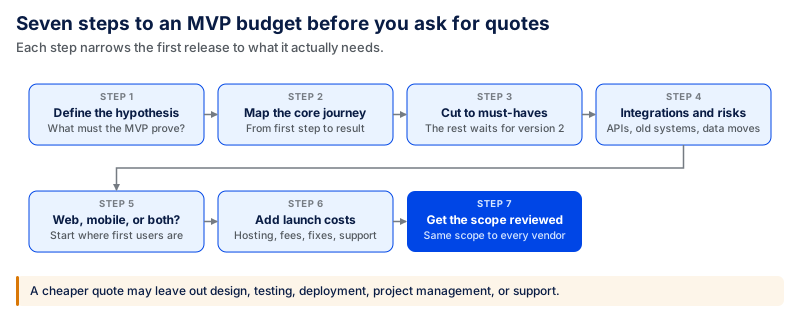
Step 1: Define the Hypothesis You Need to Validate
First, decide what you want to learn from your MVP. You may want to know if people will pay for your product, use a new feature, or switch from their current solution.
Write down the main idea you want to test. Then look at each feature you are planning. If a feature does not help you test that idea, you may not need it in the first version.
Step 2: Identify the One Core User Journey
Next, think about the main journey a user will take in your MVP. Start from their first step and follow the journey until they get the result they need.
For example, in a booking app, the user may need to find a service, choose a time, and confirm the booking. Other features like recommendations and loyalty programs can be added later.
Write down each step of this journey. This will help you understand which screens and features you actually need for the first version.
Step 3: Separate Must-Have Features From Version 2
As you plan your MVP, your feature list may start to grow. Go back to the main user journey and keep only the features users need to complete it.
Other useful features can be added in the next version. These may include advanced reports, automation, custom dashboards, or extra account options.
A smaller feature list also makes it easier for developers to estimate the cost of your MVP. This way, you only budget for what you need in the first release.
Step 4: Identify Integrations and Technical Risks
List all the outside services your MVP needs to connect with. These may include payment gateways, maps, email, SMS, CRM, accounting tools, or login services.
Also note any technical issues that may make development harder. This could include an old system, moving customer data, or connecting with a difficult API.
Share these details with developers before they give you an estimate. If these issues are found later, they can increase both the cost and development time.
Step 5: Decide Whether Web, Mobile, or Both Are Actually Necessary
You may not need both a web and mobile app for your first release. If a web app is enough to test your idea, you can start there and save the mobile app for later.
Some products may need a mobile app from the start. This is common when the product uses a phone’s camera, GPS, or push notifications. Choose the platform your first users are most likely to use. You can add other platforms later when there is enough demand.
Step 6: Add Launch and Post-Launch Costs
Some costs start after your MVP goes live. These can include hosting, domains, APIs, app store fees, monitoring, maintenance, and technical support. These costs may increase as more people use your product.
Also keep some budget for changes after launch. Your first users may find problems that were missed during testing. You may need to fix these issues or make small changes based on their feedback.
Include these costs when planning your total MVP budget.
Step 7: Get the Scope Reviewed Before Requesting a Quote
Before asking for a quote, prepare a short document that explains your MVP. Include the target user, the problem, main user journey, features, platform, integrations, and any technical concerns.
Ask a developer or technical team to review it. They may find something you missed or suggest an easier way to build the MVP.
When comparing quotes, send the same scope to each team. Also check what each price includes. A cheaper quote may not include design, testing, deployment, project management, or support.
Is Your MVP Budget Realistic?
Your MVP budget may seem enough until you list everything you want to build. Adding more platforms, user roles, integrations, or automation means more development and testing work.
Use this table to see whether your MVP scope is simple or may need a bigger budget.
| Check your scope | Easier to keep within a typical MVP budget | Budget is likely to increase when |
|---|---|---|
| Main workflow | One core task the product needs to support | Several workflows need to work from the first release |
| Users | One main user type | Customers, admins, vendors, managers, or other roles need separate access and functions |
| Platforms | One web or mobile platform | Web, iOS, and Android are all included at launch |
| Integrations | A few well-documented third-party services | The product depends on several APIs, legacy systems, or difficult integrations |
| Data and AI | Existing APIs or managed services cover the initial need | Custom data pipelines, retrieval, model work, or evaluation are required |
| Security and compliance | Standard authentication and access requirements | Sensitive data, audit trails, strict permissions, or regulatory requirements are involved |
| Automation | Manual steps are acceptable during early validation | Several processes need custom automation before launch |
| Feature roadmap | Only features needed for the first user journey are included | Version 2 ideas have been added to the MVP scope |
If most of your needs are in the middle column, your MVP has a smaller and more focused scope. If several are in the last column, you may need a bigger budget.
Before increasing your budget, check if everything is needed for the first release. You may be able to start with one platform, use existing services, or keep some tasks manual. If you need these features from the start, include them in your MVP scope and budget.
How Coding Crafts Approaches MVP Development
At Coding Crafts, we start by understanding the product idea, target users, and what the first version needs to achieve. Then, we choose the main features and create a clear plan for the development, timeline, and budget.
Once the scope is clear, we move to UX/UI design and development. We focus only on the features needed for the first release instead of building everything at once.
After launch, we look at user feedback and how people use the product. This helps us decide what needs to be improved and what can be added in future versions.
Our MVP development services follow a six-step process from research to launch. If you have a product idea, our team can help you plan the right scope and budget for your MVP.
Know what your first release will cost
Share your idea and the one journey users must complete. Coding Crafts will define the MVP scope and give you a cost range and timeline for it before development starts.
More from the blog.
View all postsRelated reading from the Coding Crafts team.