A Marketing Site for an AI Agent and MCP Platform
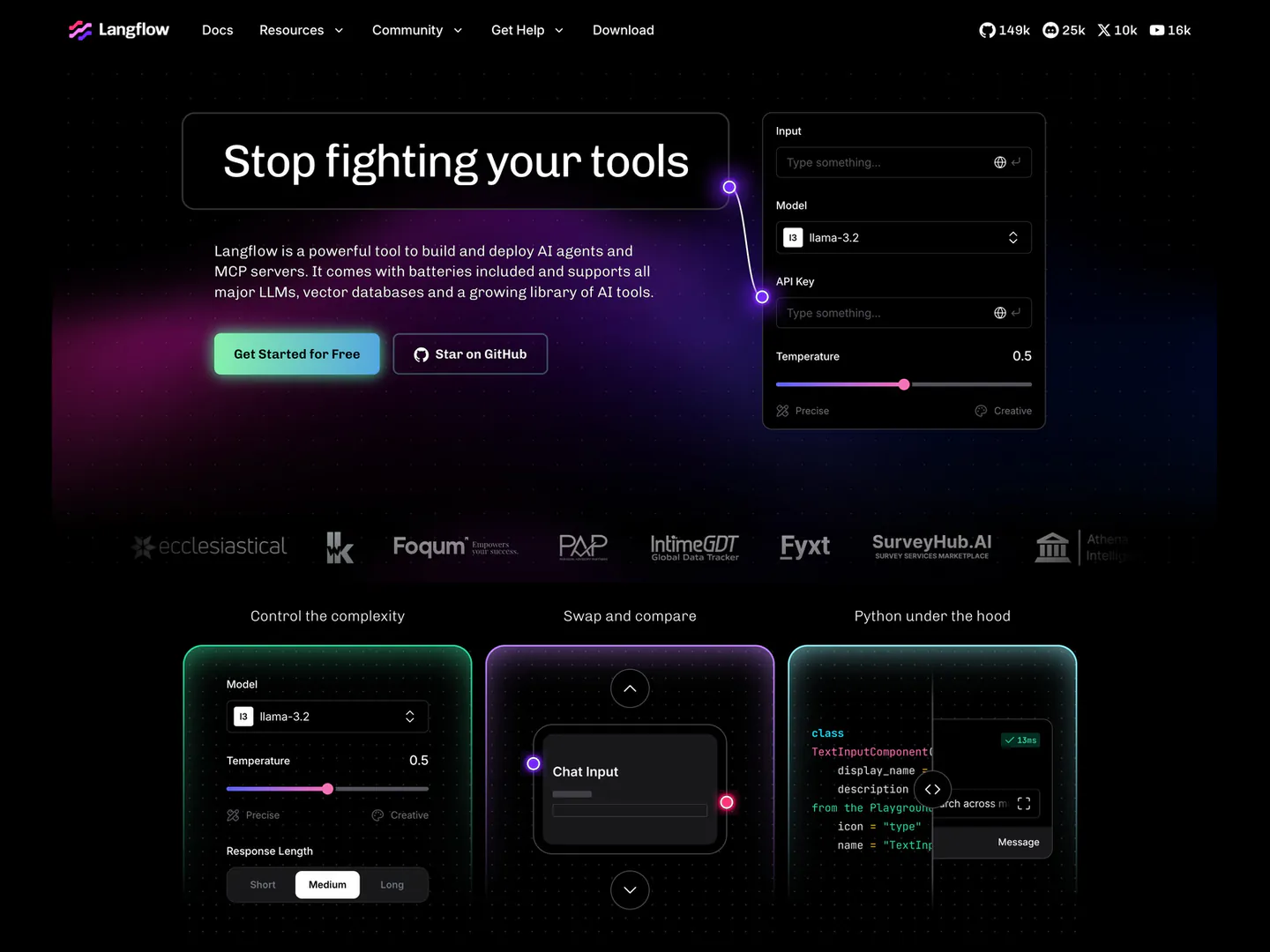
We created a marketing website for an AI agent and MCP platform to facilitate the efficient creation, testing, and deployment of AI workflows for developers. It enhances the productivity of teams by offering a centralized platform to develop production-ready AI applications across multiple large language models, vector databases, and AI tools.
The platform also offered users a range of additional tools, such as blog management, guides, downloading of the desktop application, and contact workflows, in addition to product information.
The ultimate objective was to build a modern, responsive, and highly interactive user interface for the frontend, which would be able to explain intricate AI workflows efficiently and effectively, regardless of the screen size or device type.
Dynamic SVG Connections That Never Break
The biggest challenge on the frontend was the ability to dynamically render connecting lines between UI elements, which are SVG-based. The lines had to be flexible and adjust as screens changed, and align components in responsive layouts.
The design needed to incorporate the capability for numerous line styles, such as curved, straight, and “S” shaped connectors. With these variations, without compromising responsiveness and without building layout inconsistencies, it became an implementation challenge.
The other challenge was to ensure that the front end delivered smooth performance across all browsers and devices while also incorporating dynamic calculations and interactive SVG animation.
How We Built It: Next.js with a Scalable Styling System
To boost the performance, routing, and SEO optimization of the front end of the website, we used Next.js to create it. Responsive layouts and a scalable styling system for various sections of the platform were built using SASS & Bootstrap.
We integrated MDX to support developer-focused blog posts, guides, and dynamic documentation workflows for content management and technical documentation. This enabled the platform to have content and React-based UI components cooperating more flexibly within the platform.
To address the SVG rendering issue, a custom hook was developed that dynamically adjusted line positions in real time based on the screen size and element position. We also added a structure-based enum for line style for the curved, straight, and S-shaped lines to be handled more efficiently.
It also added the OpenAI SDK to the platform for AI use cases and Sentry for front-end monitoring, error tracking, and production debugging.
What We Shipped: Docs, Downloads, and Developer Onboarding
The project resulted in a modern AI platform marketing web page that provided product visibility, developer onboarding, technical paperwork, downloads for the desktop application, and scalable content management from a single frontend system. Furthermore, the platform also launched dynamic SVG-based visual elements, which simplify complex AI workflows while avoiding the overwhelming visual impact.
During the frontend tests, the custom SVG rendering solution helped to increase the consistency of UI across responsive layouts and fixed approximately 30-40% of the existing alignment problems when resizing screens. Real-time line rendering and dynamic positioning also helped keep the visual connections between interface elements more easily visible with the additions of new sections to the platform.
By optimizing the front-end with Next.js, you have enhanced the responsiveness of your pages and minimized rendering time on different browsers and devices. For most interactive UI response times, they were reduced from nearly 3-4 seconds to less than 2 seconds during the tests.
The MDX-powered content workflow also minimized the need for developers to publish technical guides or blog-based content, improving the efficiency of content teams. The platform, in combination with Sentry monitoring and front-end optimization, provided a more stable user experience with minimal rendering issues for production when rolling out the platform.
The Outcome: Complex Workflows, Simply Told
The site has been a more desirable and engaging platform for exploring AI agent workflows and MCP infrastructure. Dynamic frontend elements simplified the complex platform relationships while maintaining good responsiveness on all devices.
The solution also enhanced content scalability, enabling blogs, technical guides, and marketing pages to be managed more efficiently, using MDX-based workflows.
The project showcases Coding Crafts' innovation in creating user interfaces and experiences that are both responsive and directly functional to AI applications.
- NextJS
- Sass
- OpenAI