An AI Financing Assistant for Merchants, Funders, and Reps
We developed an AI-powered financing platform to improve how small businesses communicate with funding partners during the loan process. The system included an AI assistant that guided merchants, funders, and sales representatives according to the funding stages. It was designed to handle common situations such as new applications, approvals, declines, missing documents, and final deals.
The product enabled role-based access, so merchants, funders, and sales personnel viewed only the details relevant to them. Alongside chat, the assistant drew on knowledge from PDFs and past call transcripts to answer workflow questions.
One Assistant, Three Roles, Zero Mixed Context
One of the big challenges was creating a single AI assistant that could behave differently for three distinct roles without mixing their contexts. The merchant needed simple and helpful answers, the funder needed deal-focused communication, and the salesperson needed pipeline guidance.
Another challenge was controlling the assistant’s behavior based on the funding stage: it had to avoid talking about offers too early, skip negotiation in declined cases, and avoid providing incorrect updates when information was still missing.
The live negotiation was also challenging because the system required adjusting rates, terms, and loan amounts while following the strict business limits. We also had to stop the assistant from repeating itself during longer chats, which can make conversations feel robotic.
In longer sessions, repetition occurred in around 20-30% of cases. After implementing anti-repeat checks and memory controls, this rate decreased to about 5-10%.
We also needed to retrieve the correct information from PDFs and transcripts, detect frustration, and persist negotiation progress in a stateless API.
How We Built It: Next.js 14, FastAPI, and Role-Based AI
We built the frontend in Next.js 14 with TypeScript and Tailwind CSS for three role-based experiences. On the backend, we used Python and FastAPI to manage APIs, business rules, and communication between the product and the AI workflows.
LangGraph was used to control the assistant’s decision flow, so each response followed a proper path of analysis, decision, and reply instead of acting like a simple chatbot. Google Gemini 2.0 Flash handled the main language tasks, while Gemini embeddings and Upstash Vector DB helped retrieve useful content from PDFs, call transcripts, and other stored material.
Supabase served as the main database to manage application records, user activity, and platform data, while APScheduler, Twilio, and Resend handled follow-ups for SMS and email. We implemented separate role prompts and a role-based context layer to improve AI assistant accuracy. We also introduced negotiation rules with floor and ceiling checks, and applied frustration scoring to decide when the conversation should move to a human rep.
What We Shipped: Three Portals and Live Negotiation
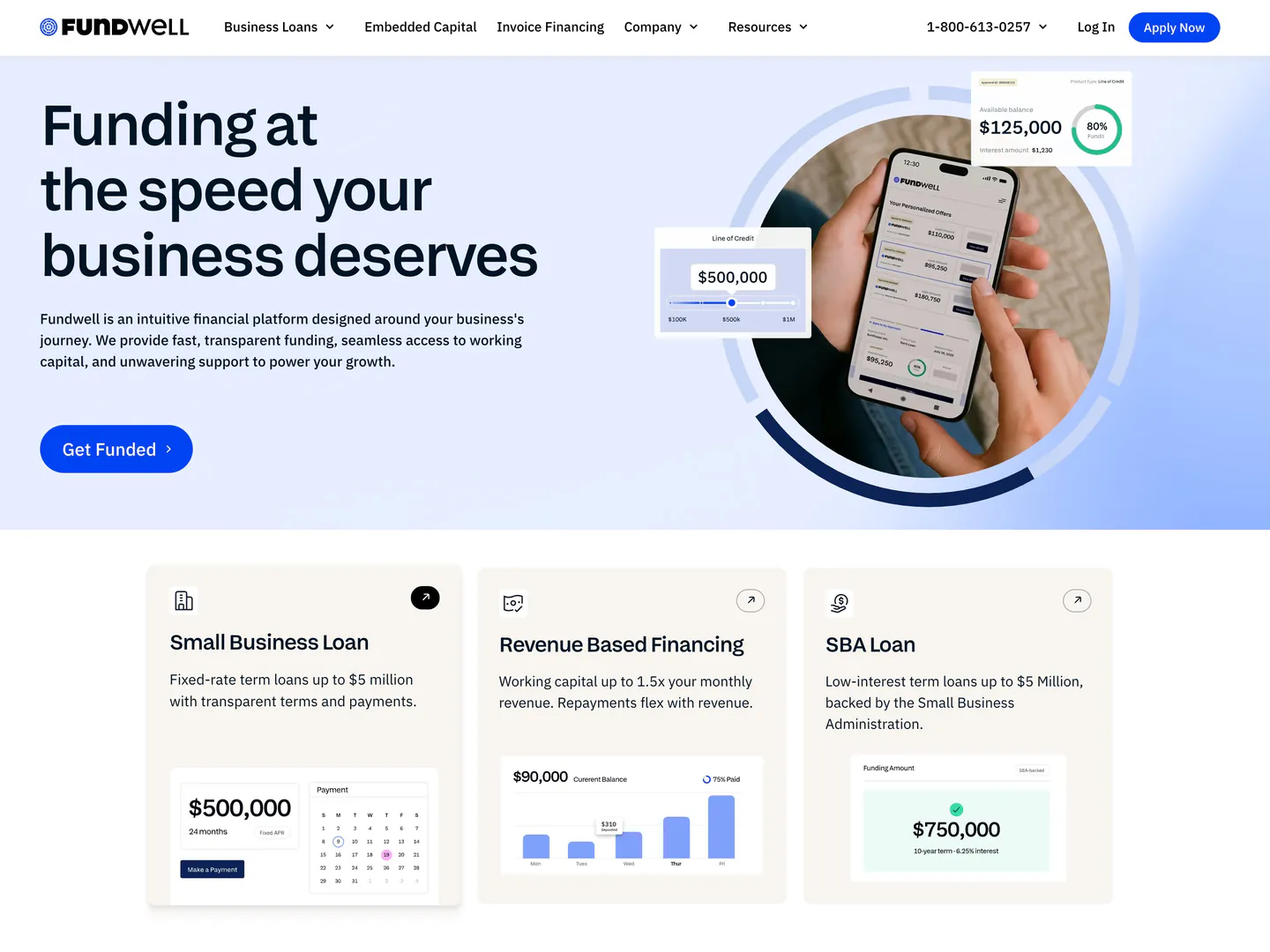
We delivered a complete AI-powered financing platform with a merchant experience, a funder-facing interaction layer, and a sales representative portal for task tracking, escalations, and pipeline visibility. The system featured an AI assistant that responded based on the user's role, funding stage, negotiation limits, and relevant business information.
We developed an automated re-engagement engine that sends follow-ups after 24, 72, and 168 hours of inactivity, resulting in a 10-18% increase in reactivated blocked applications compared to no automated follow-ups. Before this system, conversations were scattered, follow-ups were missed, and sales teams had limited visibility into next steps. After launch, conversations became structures, negotiation steps stayed within clear limits, and teams had better visibility into deal movement and merchant intent.
Improvement observed in trial usage:
- Time-to-next-action dropped from 48 hours to around 18-24 hours.
- Application completion rate improved by approximately 8-15%.
- The number of document requests per application decreased by approximately 15-25%.
- Support tickets inquiring about next steps decreased by approximately 20-30%.
- Failed payment attempts reduced from 3-6% to 1-2% via retries, clearer errors, and stateful recovery.
The Outcome: Guided Loan Conversations End to End
This AI-powered system transformed a complex financing process into a more guided, organized digital experience. It combined smart conversations, role-based views, live negotiation logic, automated suggestions, and data retrieval into a single platform. The system increased merchant engagement, closed operational gaps in follow-ups, and improved execution for sales and funding teams throughout the financing pipeline.
It also showed how careful backend planning and strong AI control can improve real business conversations without losing accuracy. This case study explains Coding Crafts’ expertise in building practical AI solutions that solve workflow problems, not just add chat features on top of them.
- NextJS
- TypeScript
- Tailwind CSS
- Python
- FastAPI
- Gemini
- Supabase
- Twilio