How Much Does It Cost to Build an Android App in 2026?
Android app development cost depends on the features, backend work, integrations, design, device support, QA, and the development team. Two projects with similar features can have very different budgets. A basic payment flow takes less work than a system with subscriptions, refunds, saved cards, and payment history. Supporting more Android versions and devices also increases the development and QA work.
This guide breaks down Android app development hours and explains how features, team rates, device support, QA, and Google Play rules affect the final estimate.
What to Know Before You Budget
There are a few things to consider before setting your Android app budget. Understanding them will help you plan the project and estimate the cost more accurately.
- App complexity: Simple apps take 6–12 weeks, mid-complexity apps take 3–6 months, and complex platforms take 6–12 months or longer. More features, user roles, integrations, and backend work increase development hours.
- Team location: Development rates vary by region. The same project costs much more with a North American agency than with a South Asian team(even though the development hours remain the same).
- Maintenance: The development budget does not end at launch. You have to set money aside for bug fixes, Android updates, security work, compatibility changes, and ongoing improvements. Annual maintenance commonly costs around 15–25% of the initial development cost.
- Google Play fees: A Google Play developer account has a $25 one-time registration fee. Apps that sell digital products or subscriptions through Google Play can also pay service fees on eligible transactions. The final amount depends on the app’s business model and applicable Google Play programs.
- Android updates: From August 31, 2026, new apps and app updates submitted to Google Play must target Android 16 (API 36). Existing apps should also meet Google Play’s target API rules to remain available to new users on newer Android versions. These annual changes create development and QA work after launch.
- App category: A content app takes less development work than a fintech or healthcare app. Payments, security, compliance, integrations, and complex user roles increase development hours and the final cost.
- Device support: Supporting older Android versions gives the app access to more devices but increases QA work. Supporting Android 11 and later reaches about 86.9% of active devices. However, the team has more Android versions and device combinations to check.
Android app cost at a glance
Figures checked 10 September 2026. Bands assume a blended offshore rate of $25–$50/hour.
| App Complexity | Typical Scope | Cost Range | Timeline |
|---|---|---|---|
| Simple | Core features, standard UI, limited backend work | $15,000–$40,000 | 6-12 weeks |
| Mid-complexity | User accounts, payments, APIs, custom design, admin panel | $40,000–$120,000 | 3-6 months |
| Complex | Real-time features, large backend, advanced integrations | $120,000 to $300,000+ | 6-12+ months |
Add 15 to 25 percent of the build cost per year for maintenance and the $25 one-time Google Play developer registration.
How to calculate your Android app cost
Calculate the hours for layout, Android development, backend development, QA, and project management. Multiply the total by the team’s blended hourly rate. Third-party services and infrastructure costs come on top of the development cost.
Total cost = total development hours × blended hourly rate + third-party and infrastructure costs
A mid-complexity Android app can take around 1,200 to 2,500 hours. Cynoteck estimates a wider range of 500 to 2,500 hours for medium-complexity apps. For this guide, we use 1200 to 2500 hours because the example has user accounts, integrations, backend development, and an admin panel.
The number of screens alone does not determine the development hours. Backend logic, integrations, user roles, payments, chat, and other complex features increase the amount of development work.
How Team Location Changes the Cost
We calculate the cost using the regional hourly rates shown later in this guide.
The development hours stay the same for every region. Only the team’s hourly rate changes to explain how team location affects the final development cost.
| Team location | Blended hourly rate | Costs for 1200 to 2500 hours |
|---|---|---|
| South Asia | $25 to $50 | $30,000 to $125000 |
| Latin America | $35 to $70 | $42000 to $175000 |
| Eastern Europe | $40 to $80 | $48000 to $200,000 |
| North America | $100 to $200 | $120,000 to $500,000 |
How the cost range works
The $30,000–$125,000 range comes from the lowest and highest calculations in the table. At the lower end, the app takes fewer hours at a lower hourly rate. At the higher end, it requires more hours at a higher rate.
Most mid-complexity projects fall between these two ends which is why we use $40,000–$120,000 as the typical range earlier in this guide.
A higher hourly rate does not automatically indicate better development quality. A lower rate is also not a sign of poor quality. Review the team’s experience, previous work, technical skills, and development process before making a decision.
Cost and Hours by Features
A cost range is more useful when you can see how the development hours are calculated. The example below breaks a mid-complexity Android e-commerce app with 15 features into the work involved in building it.
| Feature | Typical hours | Cost at $35/hr |
|---|---|---|
| User registration and profile | 80-120 | $2,800–$4,200 |
| Product or content listings | 100-140 | $3,500–$4,900 |
| Search and filtering | 80-120 | $2,800–$4,200 |
| Cart or core transaction flow | 80-120 | $2,800–$4,200 |
| Checkout and payments | 80-140 | $2,800–$4,900 |
| Order or status tracking | 60-100 | $2,100–$3,500 |
| Personalised recommendations | 80-120 | $2,800–$4,200 |
| Push notifications | 60-100 | $2,100–$3,500 |
| Social sharing | 60-100 | $2,800–$4,200 |
| Reviews and ratings | 60-100 | $2,800–$4,900 |
| In-app customer support | 60-80 | $2,100–$3,500 |
| Wishlist or saved items | 40-60 | $1400 - $2100 |
| Loyalty programs and discounts | 40-80 | $1400 - $2800 |
| Multiple languages and currencies | 40-80 | $1400-$2800 |
| Admin panel | 160-340 | $5,600 - $11,900 |
| Total | 1080-1800 | $37,800 - $63,000 |
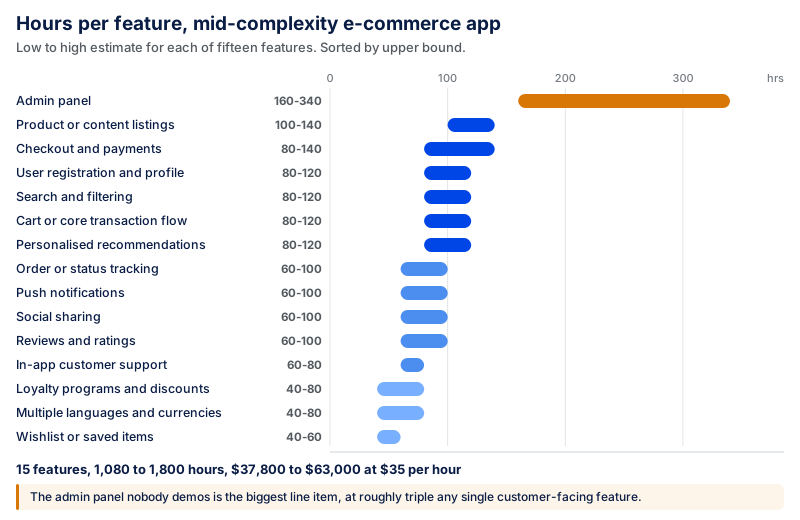
Two things worth reading off this table.
The 1,080–1,800 hours place this example at the lower end of the mid-complexity range. None of the 15 features uses real-time functionality. Live updates, more backend work, or additional third-party integrations can push the project closer to 2,500 hours.
At an offshore rate of $35 per hour, the estimated development cost is $37,800–$63,000. A higher estimate could come from more development work, a higher hourly rate, or both.
What affects the cost?
Android app development cost changes with the amount of work involved and the team you hire. Some choices increase development time and result in high prices.
Team location
| Region | Blended hourly rates |
|---|---|
| North America | $100–$200 |
| Eastern Europe | $40–$80 |
| Latin America | $35–$70 |
| South Asia | $25–$50 |
Checked 10 September 2026. Bands reflect Coding Crafts' own rate card for the South Asia row and published 2026 agency rate surveys for the rest.
Functionality and complexity
Each feature takes design, development, and QA time. Features with server-side logic also increase backend development hours.
This is why two mid-complexity Android apps can have very different costs. The final price depends on what each feature does and how much development work it takes.
Android Version and Device Support
Android device support creates additional QA work. The minimum Android version determines how many OS versions and device combinations the team has to check. Supporting older versions increases the QA hours and development cost.
| Minimum Android version | API level | Share of devices reached |
|---|---|---|
| Android 16 | 36 | 22.3% |
| Android 15 | 35 | 41.0% |
| Android 14 | 34 | 54.5% |
| Android 13 | 33 | 68.9% |
| Android 12 | 31-32 | 78.8% |
| Android 11 | 30 | 86.9% |
| Android 10 | 29 | 91.1% |
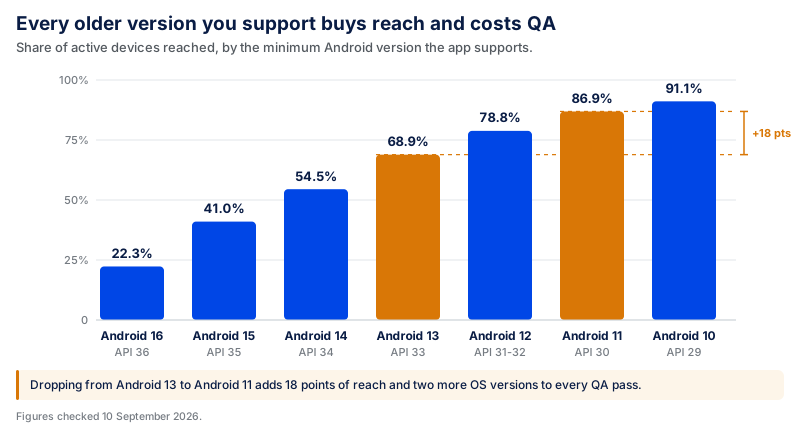
Supporting Android 11 and later reaches about 86.9% of active devices. This means checking the app on six Android versions, compared with four when Android 13 is the minimum version.
Each additional Android version increases QA work. Supporting fewer older versions reduces QA hours but also the number of devices the app supports.
Design and UI/UX
Custom design can account for 10% to 15% of the development budget, according to TekRevol. It covers the work involved in creating custom layouts, interactions, and visual elements instead of using standard UI components.
Cutting design hours can reduce the initial cost, but it can also limit the quality and usability of the final interface.
Integrations
Payments, geolocation, social login, push notifications, and two-factor authentication take additional development and QA work. Some integrations also have continuous third-party fees.
TrangoTech estimates payment gateway integration at $6,000–$18,000 and three to five weeks of development. Social login or SSO integration ranges from $3,000–$10,000 and two to four weeks.
AI features
AI features have development costs and continuous model or infrastructure costs. The price depends on how the AI works. Connecting an existing AI API takes less work than building and training a custom model.
Riseup Labs estimates basic AI applications at $10,000–$80,000, with mid-level applications ranging from $50,000–$200,000. A simple API integration, on-device AI, and a custom-trained model therefore should not use the same cost estimate.
Testing
Riseup Labs puts Android QA at 15–20% of the total development budget. Android QA takes more time because teams have more devices, screen sizes, and OS versions to check.
Supporting Android 11 and later means checking six Android versions, compared with four when Android 13 is the minimum. Each additional version increases compatibility and regression work. This increases QA hours and the final development cost.
What Android apps cost by category
Two apps with similar screens can have very different development costs. A fintech or healthcare app takes more work when it involves compliance, security, complex backend logic, or external integrations.
The app category affects the development work and total cost. The actual functionality determines how high the development cost goes.
| Category | Typical cost | Main cost drivers |
|---|---|---|
| Ride-hailing / taxi | $50,000–$400,000 | Real-time matching, separate driver and rider apps, dispatch |
| Fintech | $100,000–$350,000+ | KYC, AML screening, banking APIs, security work |
| Food delivery | $50,000–$350,000 | Three-sided platform, live tracking, restaurant tools |
| Healthcare | $80,000–$300,000 | HIPAA compliance, encrypted storage, audit logging, EHR integration |
| Social networking | $50,000–$300,000 | Real-time feeds, messaging, content moderation |
| Video and music streaming | $60,000–$300,000 | Encoding, adaptive delivery, DRM, content licensing |
| SaaS | $70,000- $250,000 | Multi-tenancy, subscription billing, role management |
| On-demand services | $45000 - $250,000 | GPS tracking, real-time matching, chat, admin panel |
| Mobile games | $50,000–$250,000 | Game engine, art assets, physics |
| E-commerce / m-commerce | $40,000–$150,000+ | Catalogue, cart, payment gateways, inventory sync |
| Education | $40,000–$150,000+ | Content delivery, offline access, progress tracking |
| Dating | $40,000–$150,000+ | Matching logic, chat, safety, verification |
| Retail | $45,000 - $140,000 | Loyalty, digital receipts, barcode scanning, POS integration |
| Content or utility | $15000 - $60,000 | Core content or utility features |
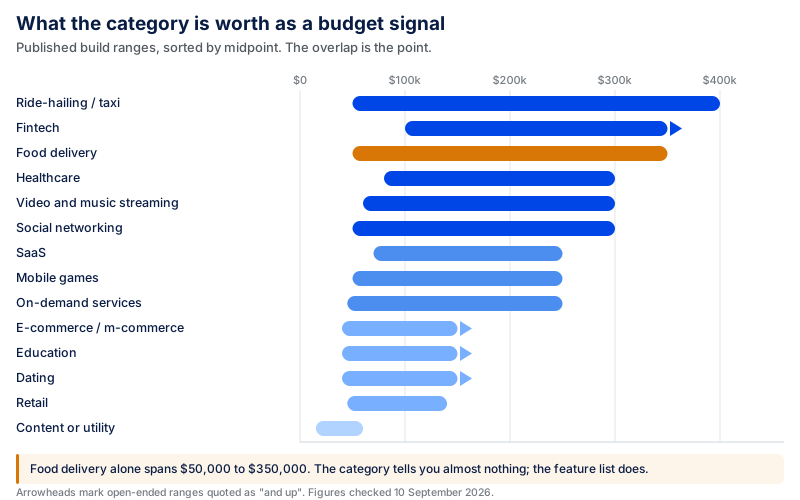
Regulated apps often cost more because of security, compliance, and integration work that is not visible in the app interface. TekRevol estimates an EHR integration with systems such as Epic or Cerner at $20,000–$60,000. Fintech apps can also involve external security audits and additional compliance work before launch.
Retail apps are generally simpler than e-commerce apps when customers complete purchases in a physical store. However, integrating the app with an existing point-of-sale system can increase development hours, especially when the system has limited API support.
App category alone does not give you an accurate budget. Published estimates for a food delivery app, for example, can range from $50,000 to $350,000. Breaking the app down by features and development hours gives you a more specific estimate.
Cost Breakdown by Development Phase
| Phase | Share of budget | Main work | Typical duration |
|---|---|---|---|
| Discovery and scoping | 5–10% | Requirements, user flows, technical approach, estimate | 1–3 weeks |
| UI/UX design | 10–15% | Wireframes, visual design, prototypes, design system | 3–6 weeks |
| Android development | 35–40% | Screens, logic, and platform work | 8–24 weeks |
| Backend | 20–25% | APIs, data layer, server-side logic | Overlaps development |
| QA | 15–20% | Functional, device, performance, and security checks | 2–6 weeks, overlapping |
| Deployment | 3–5% | Play Console setup, store listing, release | 1–2 weeks |
| Post-launch | 15–25% of build annually | Bug fixes, OS updates, improvements | Ongoing |
The breakdown helps you review a development quote before choosing a team. Ask the company to separate the estimated hours for discovery, design, development, QA, and project management.
Compare those hours with the project breakdown above. If QA or discovery has very few hours, ask how the team plans to handle that work before accepting the estimate.
Post-Launch and Additional Costs
Maintenance, store fees, and marketing are common Android app costs. However, some expenses are easier to overlook during budgeting. The three below can increase the cost during development or after launch.
Google Play Service Fee
Google Play changed its fee structure on June 30, 2026 for the US, UK, and EEA. It now separates service fees from billing fees and charges different service fees for new and existing installs. Auto-renewing subscriptions have a 10% service fee, and Google Play Billing has a separate 5% fee where applicable. Therefore, the older Google Play fee estimates may no longer apply in these regions.
| Transaction | Service fee | Google Play billing fee |
|---|---|---|
| New installs, first $1M/year | 10% | +5% |
| New installs, above $1M/year | 20% | +5% |
| Existing installs, first $1M/year | 20% | +5% |
| Existing installs, above $1M/year | 25% | +5% |
| Auto-renewing subscriptions | 10% | +5% |
Outside the US, UK, and EEA, Google Play charges 15% on the first $1 million in annual revenue, 30% above $1 million, and 15% on subscriptions until the new fee structure rolls out globally. The 5% billing fee applies when developers use Google Play Billing, whereas, the third-party payment systems charge their own processing fees. From September 2026, qualifying apps in the Play Games Level Up and Apps Experience programs pay 15% on revenue above $1 million instead of 30%.
Plus Google also charges a $25 one-time registration fee to create a Google Play developer account. This is a small cost compared with development, QA, maintenance, and transaction fees.
Google play target API requirements
Google Play updates its target API requirements every year. This creates recurring development and QA work because teams must update the app, check compatibility, fix issues, and release a new version.
- New apps and updates: From August 31, 2026, new apps and updates must target Android 16 (API 36) or higher.
- Existing apps: Android 15 (API 35) or higher keeps existing apps available to new users on newer Android versions.
- Apps targeting API 34 or lower: These apps remain available to existing users but become unavailable to some new users using newer Android versions.
- Deadline extension: Developers can request an extension through Play Console until November 1, 2026.
- Wear OS and Android Automotive: Apps must target API 35 or higher.
- Android TV and Android XR: The minimum target is API 34 or higher.
- Annual updates: Google Play updates its target API requirements every year. Teams should budget for development and QA work to update the app before each deadline.
Budget target API updates as an annual maintenance item. Plan a development and QA sprint before Google Play’s yearly deadline instead of treating each update as an emergency.
Contingency budget
Budget overruns often come from unclear requirements, new features, or changes during development. Keep 10–20% of the development cost as a separate contingency budget. For a $100,000 build, it means holding $10,000–$20,000 in reserve. Spend it only when unexpected work changes the original estimate.
Other Costs
- Third-party services: payment processors, push infrastructure, analytics and mapping APIs bill by usage.
- Marketing: app store optimization, ads, launch campaigns. The best app nobody finds still earns nothing.
Three-year cost breakdown
Annual maintenance costs 15–25% of the initial development cost. Here is what that means in dollars for each Android app cost range:
| Cost period | Simple | Mid-complexity | Complex |
|---|---|---|---|
| Year 1 — Build | $15,000–$40,000 | $40,000–$120,000 | $120,000–$300,000 |
| Year 2 — Maintenance | $2,250–$10,000 | $6,000–$30,000 | $18,000–$75,000 |
| Year 3 — Maintenance | $2,250–$10,000 | $6,000–$30,000 | $18,000–$75,000 |
| Total | $19,500–$60,000 | $52,000–$180,000 | $156,000–$450,000 |
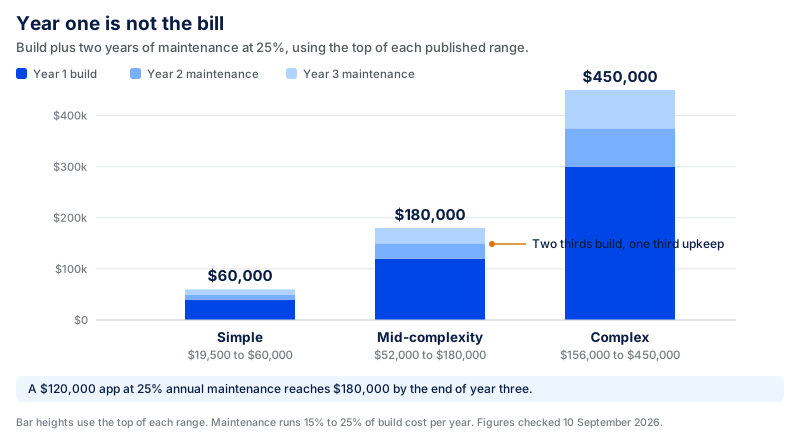
The initial build is only part of the total cost. A $120,000 app with 25% annual maintenance costs $180,000 over three years.
Android vs iOS development cost
iOS developer rates are often higher than Android rates, but Android usually takes more QA time. These differences can bring the total development costs closer together. Read our iOS app development cost guide for a detailed comparison.
For both platforms, cross-platform development allows the team to build Android and iOS apps from one shared codebase. We used React Native to build LuxPark for Android and iOS from a single codebase. The savings depend on how much platform-specific development the app has.
How to reduce development costs
- Write Down the Project Details - List the features, timeline, budget, and purpose before development begins. Clear project details reduce changes and unexpected costs during development.
- Launch an MVP First - Build the main features first and launch them to real users. Use their feedback to decide which features should go into the next version.
- Agree on the Main Features Early - Decide which features are important before development starts. Adding major features during development increases the hours, timeline, and cost.
- Choose Your Minimum Android Version - Your minimum Android version changes the QA workload and device reach. Starting at Android 13 instead of Android 11 removes two versions from QA but reduces device reach from 86.9% to 68.9%.
- Remove Extra Features - Cut lower-priority features instead of reducing development or QA quality. Removing loyalty programs, multi-currency support, and personalized recommendations from this example saves around 160–280 hours, or $5,600–$9,800 at $35 per hour.
- Check the Team Before Hiring - Do just check the development team’s hourly rate. Review its previous projects, technical experience, communication, and project management process. Read our mobile app development cost guide for more information about choosing a development team.
> Worth saying plainly: Coding Crafts charges $25–$49 per hour for Android development. This places our rates at the lower end of the regional rate table above. Since we offer offshore development services, compare our rates, experience, previous projects, and development process with other companies before choosing a team.
When custom development is not worth it?
Custom development is the wrong answer more often than agencies admit. Don't commission a custom Android build if:
- Your total budget is under $10,000. A no-code platform or existing product can be a better option for a smaller budget.
- Your budget only pays for the initial build. Plan for maintenance, QA, security work, and Android updates over the next three years.
- You cannot clearly explain the main purpose of the app. Plan the product and its main user flow before development.
- An existing product already provides most of the functionality. Configuring existing software can cost less than building a custom app.
- Most of your users are on desktop. Check your analytics first. A responsive web app can be a better option.
How long does it take to build an Android app?
Simple apps usually take 6–12 weeks, mid-complexity apps 3–6 months, and complex apps 6–12 months or longer. Features, integrations, design work, and team experience change the timeline. Clear project requirements help the team estimate the development time more accurately.
How Coding Crafts calculates your project costs
Everything above is a market range. Here is what we do instead of quoting one.
Coding Crafts charges $25–$49 per hour for Android development. We estimate each feature separately before development starts. You see the estimated hours, hourly rate, and cost for each part of the project.
Your estimate also shows the minimum Android version, expected device reach, maintenance budget, and annual target API work. A dedicated project manager tracks changes and calculates their cost before the team starts the extra work.
Our minimum project size is $10,000. If custom development does not fit your budget or project, we tell you early instead of reducing the app to fit the price.
As of September 10, 2026, our Clutch profile has a 4.9/5 rating from 7 reviews, including 6 verified reviews. You can read the individual reviews and compare our rates, project history, and client feedback before contacting us.
Frequently asked questions
How much does it cost to build an Android app?
Android app development costs $15,000–$300,000+, with most mid-complexity business apps costing $40,000–$120,000 at offshore rates. Features, development hours, and team rates determine the final cost.
Is it cheaper to build for Android or iOS?
Android and iOS development costs are often similar. iOS developer rates can be higher. However, Android usually takes a lot of QA time because it supports more devices and OS versions.
How much does it cost to maintain an Android app?
Plan 15–25% of the initial development cost per year for maintenance. At 25% annual maintenance, a $120,000 app costs about $180,000 over three years.
What does Google Play charge?
Google Play charges a $25 one-time developer registration fee plus applicable service and billing fees. The fee structure changed on June 30, 2026 in the US, UK, and EEA.
What happens if my app doesn't meet Google's target API deadline?
Existing users can continue using the app, but it loses availability to some new users on newer Android versions. As of August 31, 2026, existing apps must target API 35+, and new apps and updates API 36+.
Which Android versions should my app support?
Supporting Android 11 and later reaches about 86.9% of devices, compared with 68.9% for Android 13 and later. Including more versions increases device reach but also increases QA work.
Why do two agencies quote the same app four times apart?
Different team rates often cause the price difference. Ask each agency for the estimated hours per feature and the blended hourly rate so you can compare both quotes clearly.
The bottom line
An Android app budget depends on three main numbers: development hours, the team’s hourly rate, and annual maintenance cost. Put these numbers in the estimate so you can see exactly how the final cost is calculated.
Build the MVP first, choose the minimum Android version carefully, keep a separate contingency budget, and plan for annual target API updates from the start.
Android apps priced before they are built
Coding Crafts scopes your Android build feature by feature and quotes it line by line at $25 to $49 per hour, senior engineers and a dedicated project manager included.
More from the blog.
View all postsRelated reading from the Coding Crafts team.