Inside the DataStax Marketing Site Rebuild
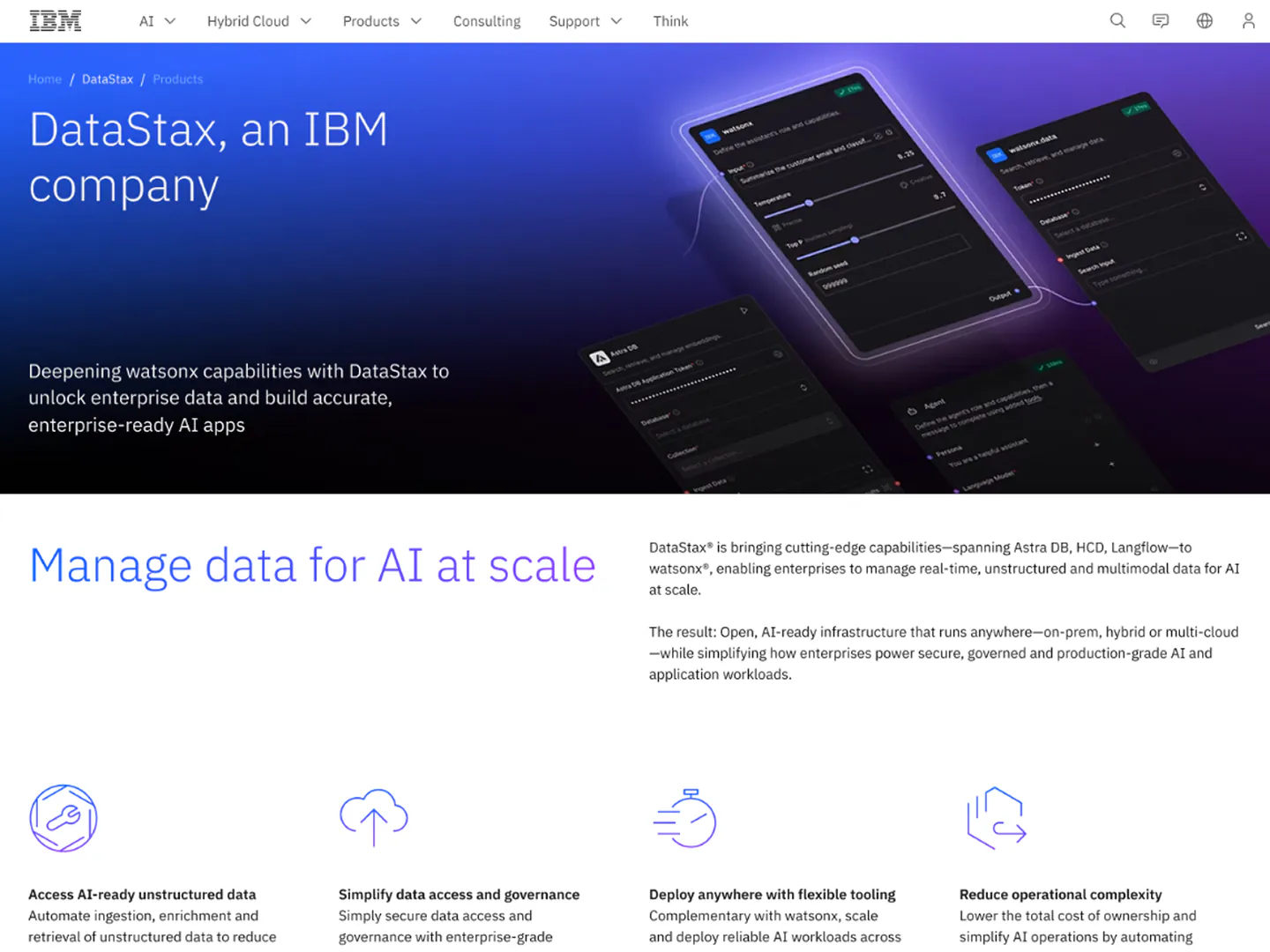
We developed a high-performing marketing site for a real-time AI data platform company that offers cloud database services, integration, developer resources, and enterprise solutions. The website was designed to have the following features: greater product visibility, scalability of content, and simplified management of marketing campaigns by various teams.
The platform offered pricing pages, integration information, feature descriptions, developer documentation, blogs, legal materials, and landing pages. The main objectives were to enable flexible content publishing and management for non-technical teams that did not rely heavily on developers.
A Page Builder Non-Technical Teams Could Trust
The major challenge was to develop a drag-and-drop content management system that would enable non-technical users to develop and update landing pages with ease. It had to be adaptable enough to accommodate the marketing team, but with web uniformity and design consistency throughout the website.
The other difficulty was being able to make the site a lot more customizable without impacting the stability of the frontend. Because there was no standard formatting applied to the layout, it was inconsistent and had to be manipulated and reimagined on the fly as users rearranged and redesigned the content.
The site also required a lot of marketing content, blogs, and developer documentation without significantly impacting its page speed or search engine ranking.
How We Built It: Next.js, Sanity, and a Drag-And-Drop Builder
To scale the site and boost its performance and SEO, we implemented Next.js for the frontend, which enhances the performance and imageability of each page, especially for marketing pages, blogs, and product documentation. The framework also worked well in boosting content-heavy pages of the website to render faster and route content more proficiently.
We used Sanity CMS as the headless content platform for content management. This enabled marketing and content teams to make, edit, and publish pages without having to take the help of the developers for most updates.
Custom Node.js API routes were created to facilitate communication between the front and back-end content flows. We also created a “drag and drop” content builder that enabled users to reorder sections, view content in a design, and publish changes with consistency, while doing so with much less paperwork.
To seamlessly continue to scale and deliver large amounts of content while retaining the ability to reuse page elements and make future changes with ease, the frontend architecture was optimized.
Publishing Without Developer Bottlenecks
We provided a scalable and efficient marketing platform, which enabled teams to do product content, blogs, developer resources, and landing pages without needing to rely too much on developers for regular updates. Further, it implemented the drag and drop content builder, which streamlined the process of creating and publishing pages for non-technical users and ensured the uniformity of the look on the front page throughout the website.
The custom content management workflows have been successful in reducing the time to launch or update marketing pages significantly. Use and test time for publishing content was reduced by 40-50% during the internal use and testing compared to previous developer-driven processes. Marketing teams could manage and publish updates more independently, aiding campaigns to come to life without creating any front-end bottlenecks.
Other optimizations on the frontend, including Next.js, have increased website responsiveness on content-heavy pages. During tests, average page load time was improved by around 25-35% while optimizations for routing and rendering made delays in navigating large sections of documentation and blog smoother.
The modular frontend architecture and page components were easily reusable to enable long-term scalability as new products, integrations, and other developer resources were introduced to the platform. The drag-and-drop builder also minimized inconsistencies in layouts while editing content, and enhanced visual consistency in landing pages and marketing sections.
The Outcome: 40-50% Faster Content Publishing
The platform offered users a more streamlined and efficient database experience, along with AI infrastructure and developer tools that were both quicker and more scalable. Content teams gained more control over marketing flow management without altering the front-end appearance.
The solution also boosted the efficiency of the operation, as the developer did not have to be involved again in the normal process of making content updates, facilitating the execution of campaigns quickly. The scalable architecture ensured the platform's growth potential as more products and resources were added to it.
This project is an example of Coding Crafts' specialization in creating scalable frontend systems, flexible CMS-driven architectures, performance-driven marketing platforms, and developer-friendly web experiences for enterprise technology products.
- NodeJS
- NextJS
- Sanity
- Sass